Vitamin K
(Anti-haemorrhagic Vitamin)
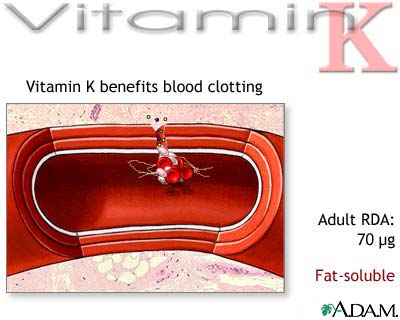
- Vitamin K is essential for the prevention of internal bleeding and haemorrhages.
- It aids in reducing excessive menstrual flow in women.
- This vitamin is important for the normal functioning of the liver.
- It is also involved in the energy producing activities of the tissues, particularly, those of the nervous system.
- It is essential for the production of protein called prothrombin and other factors involved in the blood-clotting mechanism. Hence it is known to prevent haemorrhages.
- Recommended Daily Allowance - Vitamin K
Men
70-140 mcg
Women 70-140 mcg
Children 35-75 mcg
Women 70-140 mcg
Children 35-75 mcg
Sources
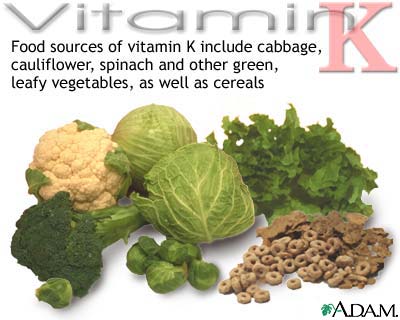
- Cauliflower,
cabbage, spinach, alfalfa, yoghurt, soya beans, and, to a lesser
extent, in wheat and oats.
- Animal
products contain only a little vitamin K. Cow's milk is a better source than
human milk.
- Vitamin
K is also manufactured by bacteria in healthy intestines.
|
Rich Food Sources of Vitamin K - values per 100g |
mcg |
|
Cauliflower |
3600 |
|
Brussels sprouts |
800 |
|
Broccoli |
800 |
|
Lettuce |
700 |
|
Spinach |
600 |
|
Pig's liver |
600 |
|
Tomatoes |
400 |
|
Cabbage |
400 |
|
String beans |
290 |
|
Lean meat |
100 |
Deficiency:
- Primary
deficiency of vitamin K in adults has not yet been clearly demonstrated, either
by observation of malnourished patients or by dietetic experiments on volunteers.
Hence it may be assumed that even the worst diets contain enough of this
vitamin to meet normal human needs. A deficiency state would more likely be
caused by a failure to absorb or utilise the vitamin. Low vitamin K intake,
plus antibiotic therapy, which reduces its production by bacteria, may result
in lowered levels of vitamin K in the body.
- A deficiency of vitamin K which results in the blood taking longer to clot, may cause severe haemorrhages anywhere in the body. Nosebleeds and bleeding can prove to be life threatening.